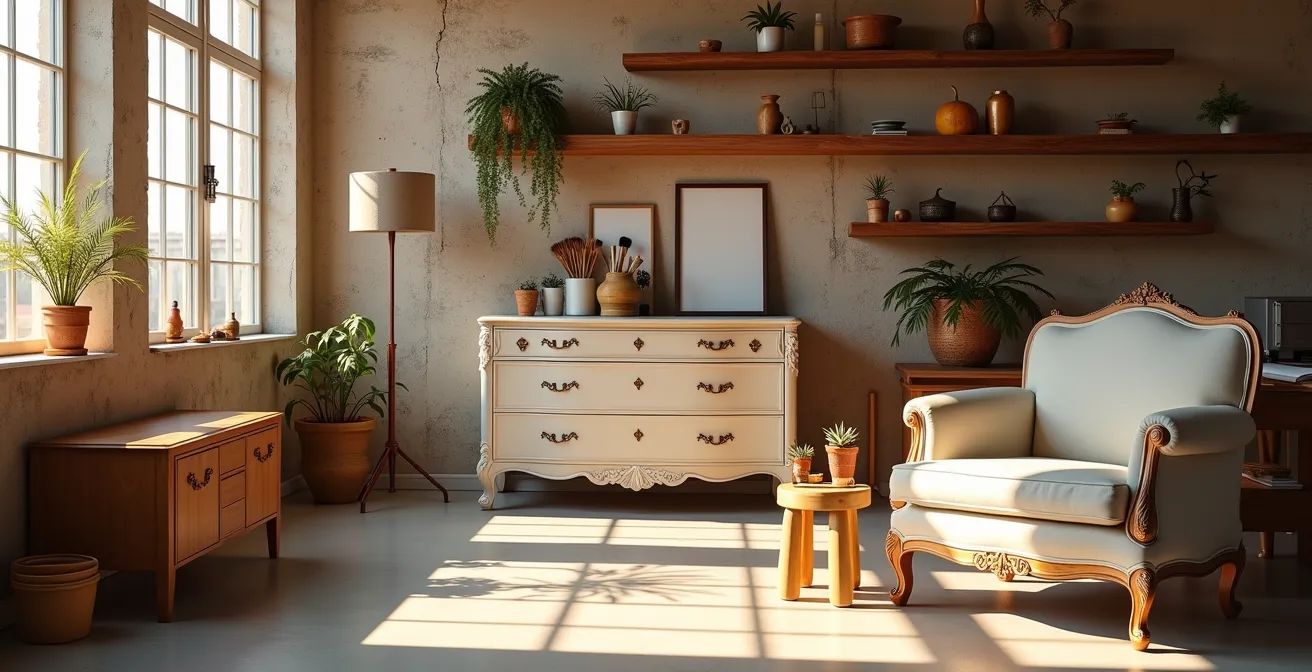
Transforming vintage finds into luxury pieces isn’t about mastering complex carpentry; it’s about developing ‘Material Intelligence’ to make smart, artistic choices.
- Prioritize safety by learning to identify and handle risks like lead paint and toxic pallet wood.
- Select high-impact, low-skill finishes like Chalk Paint or Milk Paint to achieve specific aesthetics quickly.
Recommendation: Focus on understanding the story and safety of your materials first. This is the true foundation of creating valuable, one-of-a-kind decor that lasts.
The allure of a unique, storied piece of furniture is undeniable. You see a vintage dresser or a forgotten chair and envision it as a luxury statement in your home. Yet, the dream often collides with the reality of complex joinery, intimidating tools, and the belief that you need to be a master carpenter to achieve a high-end finish. This common frustration leads many creative individuals to abandon their projects, convinced that true transformation is beyond their reach.
While the internet is filled with simple advice to “just paint it” or “change the hardware,” these tips barely scratch the surface. They miss the most crucial element. The secret to elevating reclaimed items to art and function doesn’t lie in your ability to build, but in your ability to see. It’s about cultivating what I call Material Intelligence—an understanding of a piece’s history, its hidden dangers, and its aesthetic potential. It’s an approach that favors smart, strategic choices over brute-force woodworking.
This guide is built on that principle. We will move beyond the platitudes to give you a designer’s framework for aesthetic alchemy. We’ll explore why reclaimed wood holds so much value, how to address critical safety issues without being an expert, and how to choose the right finishes and shortcuts to create a stunning result. This is your path to turning waste into wonder, using your creativity as your primary tool.
This article will walk you through the essential knowledge and techniques to confidently tackle your next project. From understanding market value to mastering no-skill hacks, you’ll gain the ‘Material Intelligence’ needed to create decor that is not only beautiful but also safe and valuable.
Contents: How to Master the Art of Aesthetic Alchemy
- Why Is a Table Made of Reclaimed Wood Worth More Than a New One?
- How to Strip Lead Paint From Old Furniture Safely?
- Chalk Paint or Milk Paint: Which Is Best for Beginners?
- The Pallet Wood Mistake That Brings Toxins Into Your Home
- When to Sand: Before or After Disassembling the Piece?
- Why Are Raw Material Costs Rising Faster Than Inflation?
- Why Does It Take 10 Years to Learn to Weave Correctly?
- How Can Small Businesses Profit From Waste Streams?
Why Is a Table Made of Reclaimed Wood Worth More Than a New One?
Before you even pick up a brush, it’s vital to understand the inherent worth of what you’re working with. A piece of vintage furniture isn’t just “old wood”; it’s a vessel of history, character, and increasingly, economic value. The market for reclaimed materials is booming, driven by a collective shift towards sustainability and a desire for authenticity that mass-produced items simply cannot offer. The global reclaimed lumber market, valued at $55.72 Billion in 2023, is projected to reach nearly $100 billion by 2033. This isn’t a fleeting trend; it’s a fundamental re-evaluation of what we consider valuable.
The furniture segment is at the heart of this movement, accounting for the largest share of the market. Consumers are actively seeking the unique story and weathered texture that only aged wood possesses. Each knot, nail hole, and saw mark tells a tale, creating a one-of-a-kind aesthetic that interior designers prize. This “curated patina” is something that new furniture attempts to replicate with artificial distressing, but it never captures the genuine soul of a piece that has lived a life.
Furthermore, the wood itself is often of superior quality. Old-growth timber, from which much vintage furniture was made, is denser and more stable than the fast-growing wood used today. By choosing to upcycle, you are not only acquiring a piece with a rich narrative but also a higher-grade material. This combination of story, sustainability, and superior quality is precisely why a thoughtfully restored reclaimed table is often worth more, both aesthetically and financially, than its brand-new counterpart.
How to Strip Lead Paint From Old Furniture Safely?
Your ‘Material Intelligence’ is most critical when it comes to safety. Many beautiful vintage pieces, especially those made before 1978, are coated in lead-based paint. Ignoring this is not just a mistake; it’s a significant health hazard for you and your family. Luxury begins with safety, and a beautiful piece that is toxic has no true value. Therefore, the first step before any aesthetic work begins is to test for lead. Simple, EPA-recognized test kits are readily available and non-negotiable.

If the test is positive, do not panic, and do not start aggressively sanding. Your goal is to contain, not aerosolize, the lead dust. The safest approach for a beginner is often encapsulation, not removal. This involves using a specialized primer designed to seal the lead paint, creating a safe, stable barrier over which you can apply your new finish. This method requires no stripping and is the epitome of a high-impact, low-skill solution.
If stripping is absolutely necessary for your desired finish, it must be done with extreme care following certified procedures. This means working in a contained area, using wet-sanding techniques to control dust, and wearing appropriate personal protective equipment (PPE), including a P100 respirator. The U.S. Environmental Protection Agency (EPA) has strict Renovation, Repair, and Painting (RRP) rules. While a homeowner working on their own home has some exemptions, the safety principles are universal. As a leading training provider warns, the consequences of non-compliance in professional settings are severe.
Failure to comply with EPA certification requirements WILL result in fines of up to $41,056 per violation on a qualifying project.
– Zack Academy, EPA Lead Certification Training Provider
For any large-scale project or if you feel unsure, the smartest move is to hire an EPA Certified Renovator. Understanding when to call a professional is a key part of Material Intelligence. Your health is worth more than any piece of furniture.
Chalk Paint or Milk Paint: Which Is Best for Beginners?
Once safety is handled, you can move on to the fun part: the aesthetic alchemy. For beginners without carpentry skills, paint is the most powerful tool for transformation. But the choice between the two most popular options for vintage furniture—Chalk Paint and Milk Paint—can be confusing. The right decision depends entirely on the final look you want to achieve. This is where your artistic vision comes into play.
Chalk Paint is the beginner’s best friend for a reason. As its creator, Annie Sloan, famously states, its greatest advantage is the minimal prep work. It adheres to almost any surface without sanding or priming, allowing you to dive straight into the creative process. It provides a velvety, matte, and consistent finish that is perfect for a modern, ‘Restoration Hardware’ inspired look. It’s easy to distress with a bit of sandpaper for a gently aged effect, but its natural state is uniform and opaque.
Whichever piece of furniture you’re painting, you don’t have to worry about sanding or priming first. You can get straight into the fun bit!
– Annie Sloan, Annie Sloan Official Website
Milk Paint, on the other hand, is the key to an authentically rustic or primitive ‘European farmhouse’ patina. Traditionally sold as a powder you mix with water, it functions more like a stain, absorbing into raw wood. On previously finished surfaces, it has a tendency to resist and chip off in random patterns. This “chippy” look is highly sought after for its authenticity, but it is less predictable than Chalk Paint. It may require a bonding agent if you want a more solid, controlled finish. The following table breaks down the key differences to help you make an intelligent choice.
This comparative overview, based on a detailed furniture painting guide, highlights the distinct paths each paint offers.
| Feature | Chalk Paint | Milk Paint |
|---|---|---|
| Finish | Velvety, matte ‘Restoration Hardware’ look | Authentic, chippy ‘European farmhouse’ patina |
| Prep Work | Minimal – no sanding or priming needed | Requires mixing powder with water |
| Adhesion | Sticks to almost any surface | May require bonding agent for some surfaces |
| Distressing | Easy with sandpaper | Natural chipping for authentic look |
| Sealing Required | Yes – wax or polyacrylic | Yes – wax or oil finish |
| Best For | Beginners wanting quick results | Primitive, rustic furniture styles |
The Pallet Wood Mistake That Brings Toxins Into Your Home
In the world of upcycling, pallet wood is often seen as the ultimate free resource. However, this is where Material Intelligence becomes a crucial shield against hidden dangers. Not all pallets are created equal, and grabbing an unmarked one from behind a warehouse can introduce harmful toxins into your home. Many pallets used for international shipping are treated with chemicals to prevent pests, and the most dangerous among these is Methyl Bromide.
Pallets treated with this potent neurotoxin are marked with an “MB” stamp. This wood should never, under any circumstances, be brought indoors or used for a furniture project. The chemical can off-gas over time, posing a serious health risk. A luxury piece of decor is a healthy one, and the risk associated with MB-treated wood is simply not worth it. Your first action when considering a pallet is to look for the stamp and immediately reject any marked with “MB”.
The safe alternative is to look for pallets marked with an “HT” stamp, which indicates they have been Heat Treated instead of chemically treated. These are generally safe for indoor projects, provided they are clean. Even with an HT stamp, you must inspect the wood for signs of contamination. Pallets are industrial items; they can have spills from oils, chemicals, or other hazardous materials that have soaked into the porous wood. If a pallet has strange stains or a chemical odor, leave it behind.
Ultimately, the safest and most reliable reclaimed wood often comes from dedicated suppliers who salvage timbers from old barns and warehouses. While this wood isn’t free, its cost is often justified by its guaranteed safety and superior character. Remember that truly valuable reclaimed flooring can cost between $9-$15 per square foot, which puts the “free” pallet into perspective. A little investment ensures peace of mind.
Your Action Plan: Safe Pallet Wood Identification
- Inspect for Stamps: Locate the IPPC logo on the pallet and check the treatment code. Always prioritize pallets stamped with “HT” (Heat Treated).
- Identify and Avoid Toxins: Immediately reject any pallet with an “MB” stamp (Methyl Bromide). Also, avoid pallets with no stamp at all, as their treatment history is unknown.
- Check for Contamination: Examine the wood for any dark stains, discoloration, or oily residues. Smell the wood; a strong chemical or unpleasant odor is a major red flag.
- Assess Overall Condition: Look for signs of mold, rot, or excessive damage. A clean, dry, and structurally sound HT pallet is your best candidate.
- Plan for Sourcing: If safe pallets are hard to find, research local reclaimed lumber yards. They offer a safer, more reliable source for character-rich wood.
When to Sand: Before or After Disassembling the Piece?
The question of process—what to do and when—often paralyzes beginners. A common point of confusion is sanding. Do you take the entire piece apart and sand each component individually, or do you sand it while it’s still assembled? The answer, guided by professional practice, is elegantly simple: do only what is necessary. Disassembly is a carpentry-adjacent skill, and our goal is to avoid it unless absolutely required for a repair.
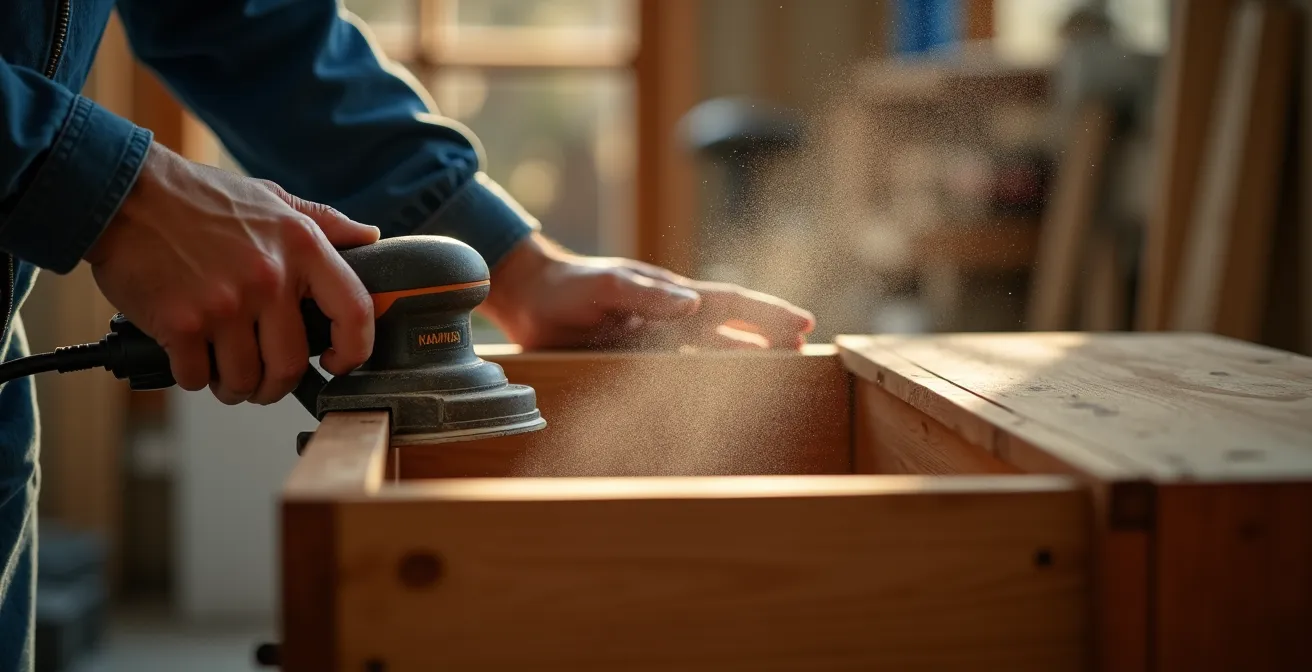
For most refinishing projects, you should sand the piece while it is fully assembled. This approach maintains the structural integrity of the piece and saves an enormous amount of time and effort. You can easily access most surfaces with a sanding block or a small orbital sander. The only time to consider disassembly is when a specific part is broken or needs a repair that is inaccessible otherwise—for example, re-gluing a loose leg joint or fixing a split drawer front.
As one professional guide to refinishing points out, the repair phase is distinct and comes before the final finishing steps. This is the moment to address deep gouges, re-glue veneers, or fix hardware. If a repair necessitates taking a small part off, do so, complete the repair and sanding on that single piece, and then re-attach it. The guiding principle is to limit disassembly to a last resort for essential repairs, not as a default step for sanding. This keeps the project within the “no carpentry” framework.
This high-impact, low-skill approach focuses your energy where it matters most: creating a beautiful surface finish. By avoiding unnecessary deconstruction, you streamline your process and reduce the risk of damaging the piece or being unable to put it back together correctly. Work smart, not hard, and let the existing structure of the furniture be your guide.
Why Are Raw Material Costs Rising Faster Than Inflation?
Your decision to upcycle vintage furniture is not just an artistic one; it’s also an incredibly savvy economic choice. Understanding the broader market context will reinforce your commitment to the craft. In recent years, the cost of new raw materials, particularly lumber, has been escalating dramatically. This isn’t just standard inflation; it’s a complex mix of supply chain disruptions, rising labor costs, and increasing restrictions on logging in many parts of the world.
This sustained price pressure on new timber has a direct impact on the cost of mass-produced furniture. As manufacturers pay more for raw materials, those costs are passed on to the consumer. As a result, the price of new lumber makes reclaimed wood an increasingly attractive option, especially when salvaged from demolitions. The global wood furniture market is still projected to grow, but the rising input costs are changing the value equation for consumers and designers alike.
This economic reality positions reclaimed and vintage furniture in a powerful new light. It ceases to be merely a “cheaper” alternative and becomes a more stable and valuable asset class. While the cost of new goods is volatile and subject to global supply chain whims, the supply of vintage pieces is finite and local. By rescuing and refinishing an old piece, you are effectively insulating yourself from the inflationary pressures of the new materials market.
You are transforming an item from a “used good” into a “valuable antique” or a “bespoke design piece.” This act of aesthetic alchemy not only saves you money in the short term but also creates an object with lasting, and potentially appreciating, value. Your work is a direct counter-response to the throwaway culture of fast furniture, grounded in both economic and environmental wisdom.
Why Does It Take 10 Years to Learn to Weave Correctly?
The question is a classic example of how a desirable, high-end look can seem completely out of reach. The intricate texture of woven cane or rattan on a cabinet door or headboard exudes luxury, but the idea of learning to weave is daunting. The good news is, you don’t have to. The essence of the “no carpentry” philosophy is finding clever shortcuts to achieve a premium look. Material Intelligence isn’t just about wood and paint; it’s about knowing which ready-made materials can give you 80% of the look with 20% of the effort.
Instead of learning to weave from scratch, you can use pre-made cane webbing or rattan sheets. These materials are sold by the roll or sheet and can be easily applied to furniture surfaces. For a cabinet with inset panels, you can simply remove the old panel, cut the cane webbing to size, and secure it in place with a staple gun on the inside of the door. For flat surfaces, the webbing can be glued down and framed with a thin piece of trim for a clean, professional finish.
This “hack” gives you the coveted woven texture in a single afternoon. The same principle applies to other textile looks. You can use other materials to create a similar effect with minimal skill required. Here are a few high-impact ideas:
- Grasscloth Wallpaper: Apply it to drawer fronts or a tabletop for an instant, sophisticated textile appearance.
- Upholstered Panels: Cut thin plywood panels to fit, wrap them in a luxurious fabric like velvet or linen using a staple gun (no sewing needed), and then glue them onto the furniture surface.
- Fluted Wood Trim: While it involves some cutting, applying pre-milled fluted molding to a flat surface creates a highly popular, modern texture with basic tools.
The key is to think like a set designer. You are creating the illusion of complexity. By focusing on the final visual impact and using clever material shortcuts, you can bypass years of skill acquisition and jump straight to a beautiful, luxurious result.
Key Takeaways
- True value in upcycling comes from ‘Material Intelligence’—understanding a piece’s story, safety, and potential.
- Safety is non-negotiable. Always test for lead paint and identify pallet wood stamps (HT vs. MB) before starting.
- Choose your finish strategically: Chalk Paint for quick, modern results and Milk Paint for an authentic, chippy patina.
How Can Small Businesses Profit From Waste Streams?
The principles of transforming vintage furniture don’t just apply to personal projects; they form the foundation of a thriving and sustainable business model. For creative entrepreneurs, waste streams are not trash—they are unrefined assets. The growing consumer demand for unique, eco-friendly, and story-rich furnishings has created a significant market opportunity for small businesses focused on reclaimed materials.
The core of the business is identifying and acquiring low-cost or free inventory (discarded furniture, demolition salvage) and using aesthetic alchemy to transform it into high-value, bespoke pieces. The profit margin is built on skill and vision, not expensive raw materials. This model is especially powerful because it resonates with a wide range of consumers, from environmentally conscious millennials to design aficionados looking for a statement piece that no one else has.
The commercial sector, in particular, represents a massive opportunity. While residential demand is strong, the commercial segment, including offices, restaurants, and retail spaces, accounts for the largest share of the reclaimed lumber market. Businesses are increasingly using reclaimed wood as a specialty item to create a unique brand identity and signal a commitment to sustainability. A furniture upcycler can position themselves as a B2B supplier, creating custom pieces for commercial interiors, which often command higher prices and lead to larger, recurring projects.
Success in this field hinges on the same ‘Material Intelligence’ we’ve discussed. A business owner must be an expert at sourcing safe materials, choosing the right finishing techniques for durability, and, most importantly, telling the story of each piece. Marketing is not just about showing a finished table; it’s about selling its history, its transformation, and its one-of-a-kind character. By mastering this narrative, a small business can turn forgotten items into a profitable and meaningful enterprise.
Now that you are equipped with the foundational knowledge of Material Intelligence, you have the power to look at any forgotten piece of furniture and see not its flaws, but its potential. Start your next project with confidence, knowing that the most important tools you have are your creativity and your strategic eye.