Innovation & Green Tech
The convergence of technological innovation and environmental urgency has created a transformative field where engineering meets ecology. Green technology is no longer a niche pursuit reserved for environmental activists—it has become a fundamental pillar of modern economic strategy, infrastructure planning, and industrial evolution. From the energy grids powering our cities to the materials flowing through global supply chains, innovation is reshaping how we produce, consume, and regenerate resources.
This transformation encompasses far more than installing solar panels or switching to electric vehicles. It involves rethinking entire systems: redesigning business models to eliminate waste, building intelligent infrastructure that optimizes energy flows in real-time, and developing technologies that can decarbonize sectors previously considered impossible to clean up. Understanding these interconnected domains—from circular economy principles to grid modernization, from battery chemistry to industrial hydrogen—provides the foundation for navigating the sustainable transition. This comprehensive exploration connects the dots between emerging technologies, market realities, and practical implementation challenges.
Scaling Green Innovation: From Lab to Market
The journey from a promising sustainable technology prototype to market-ready solution represents one of the most challenging transitions in green innovation. Unlike conventional tech startups, regenerative solutions often face a unique paradox: they must compete on price and performance while simultaneously addressing environmental externalities that traditional markets don’t properly value.
The funding landscape for early-stage green innovation reveals significant gaps. Venture capital typically seeks rapid returns within five to seven years, yet many sustainable technologies—particularly those requiring physical infrastructure or material science breakthroughs—demand longer development cycles. Technologies like advanced materials for carbon capture, novel battery chemistries, or regenerative agriculture systems may need a decade or more to reach commercial scale. This timeline mismatch creates what investors call the “valley of death,” where promising innovations struggle to secure the patient capital necessary for proper development.
Product-market fit in sustainable tech differs fundamentally from conventional products. A regenerative solution must satisfy multiple stakeholders simultaneously:
- End users who demand performance parity or superiority compared to incumbent solutions
- Regulatory frameworks that may reward environmental benefits through subsidies, tax credits, or mandates
- Supply chain partners who need assurance of reliability and scalability
- Investors seeking evidence of viable unit economics and defensible competitive advantages
The myth of instant profitability has derailed many sustainable ventures. Building robust technology platforms—whether offshore wind farms, battery manufacturing facilities, or industrial electrolyzers—requires substantial upfront capital investment. The path to profitability often involves strategic sequencing: proving the technology at pilot scale, securing intellectual property protection, building demonstration projects that attract larger partners, and gradually scaling production to achieve cost reductions through manufacturing learning curves.
Circular Economy: Redesigning Business for Regeneration
The linear “take-make-waste” economic model has become an increasingly recognized liability. This traditional approach—extracting raw materials, manufacturing products, selling them, and discarding them after use—generates massive waste streams, depletes finite resources, and creates environmental damage that ultimately translates into business risk. Forward-thinking organizations are transitioning toward closed-loop systems where materials circulate continuously, waste becomes feedstock, and products are designed from inception for multiple lifecycles.
This transformation requires fundamental changes to business models. The shift from selling products to offering them as services—whether leasing industrial equipment, providing lighting-as-a-service, or implementing take-back programs for electronics—realigns incentives. When manufacturers retain ownership of their products, they naturally design for durability, repairability, and disassembly rather than planned obsolescence. A lighting company that sells lumens instead of bulbs has every incentive to create fixtures that last decades and can be easily upgraded with improved components.
Operationalizing circularity begins with comprehensive waste stream auditing. Companies must map material flows through their operations with the same rigor they apply to financial accounting. This process reveals opportunities that often surprise leadership teams:
- Identify all material inputs and outputs, including often-overlooked streams like packaging, lubricants, and cleaning supplies
- Quantify volumes, costs, and environmental impacts of each stream
- Evaluate potential for reduction, reuse, or recycling of each material
- Assess the business case for circular alternatives, considering both direct costs and risk mitigation
- Pilot circular interventions at small scale before full implementation
Design for disassembly represents a critical technical capability. Products engineered for easy separation of components enable repair, refurbishment, and material recovery. This means choosing reversible fasteners over permanent adhesives, standardizing components across product lines, and clearly marking materials to facilitate sorting. The economic value emerges when “waste” materials become valuable inputs, reducing both disposal costs and virgin material procurement.
Smart Systems and Connected Infrastructure
The integration of digital intelligence into physical infrastructure creates profound opportunities for resource optimization—but also introduces new challenges and hidden environmental costs. Smart city systems, connected energy management platforms, and IoT-enabled buildings can dramatically reduce consumption when implemented thoughtfully. However, the digital infrastructure itself carries a carbon footprint that often remains invisible to users and decision-makers.
Data centers, network equipment, and billions of connected devices consume substantial electricity and require cooling, manufacturing inputs, and eventual disposal. The efficiency gains from smart thermostats or optimized traffic systems must be weighed against the embedded energy in manufacturing sensors, the power consumed by constant connectivity, and the short replacement cycles of digital hardware. A truly sustainable approach requires lifecycle thinking—calculating whether the operational savings genuinely exceed the total environmental cost of deploying and maintaining digital systems.
The architecture of intelligent infrastructure presents critical design choices. Centralized systems concentrate processing power and data in large facilities, enabling sophisticated optimization algorithms but creating single points of failure and potential cybersecurity vulnerabilities. Decentralized intelligence distributes decision-making to edge devices, reducing latency and improving resilience but potentially sacrificing system-wide optimization. Many effective implementations employ hybrid approaches, with local intelligence handling real-time responses while cloud platforms manage coordination and learning.
The cyber-vulnerability of connected infrastructure represents an emerging risk category. As energy grids, water systems, and transportation networks become digitally managed, they become potential targets for disruption. Security must be architected from the foundation, not added as an afterthought. This includes hardware-level security, encrypted communications, robust authentication, and the ability to operate in degraded modes when network connectivity is compromised.
Renewable Energy: Solar, Wind, and Grid Transformation
The physics of renewable energy creates fundamentally different operational characteristics compared to fossil fuel generation. Understanding these differences is essential for anyone navigating the energy transition, whether as an investor, policymaker, or infrastructure developer.
Solar and Wind: Technical Realities
Solar panels degrade gradually over time, typically losing efficiency at approximately 0.5% to 1% annually due to material degradation, micro-cracking, and environmental exposure. A panel rated at 300 watts initially might produce around 270 watts after 25 years. This predictable decline influences project economics—developers must model revenue assuming declining output, while operators optimize cleaning schedules and vegetation management to minimize additional losses.
Offshore wind has emerged as a particularly promising frontier because wind speeds over water are consistently higher and more stable than onshore locations. The marine environment eliminates terrain obstacles and provides access to stronger, more consistent wind resources. However, engineering challenges are formidable: transmitting power to shore requires submarine cables capable of handling high voltages across tens of kilometers, while corrosion in salt environments demands specialized materials and protective coatings. Platform design varies dramatically with water depth—fixed-bottom turbines work in depths up to approximately 60 meters, while deeper waters require floating platforms anchored to the seabed.
Grid Economics and Policy Mechanisms
The intermittency of renewable generation creates novel grid dynamics. On particularly sunny or windy days when renewable production exceeds demand, wholesale electricity prices can briefly turn negative—generators actually pay to deliver power rather than being paid for it. This counterintuitive situation occurs because some generators (particularly nuclear and coal plants) find it more economical to pay for disposal of excess power than to shut down and restart their facilities.
Capacity markets have evolved to ensure grid reliability in renewable-heavy systems. These mechanisms pay generators not just for the electricity they produce but also for their availability during peak demand periods. This creates revenue streams for dispatchable generation (like gas peakers or batteries) that might run infrequently but provide critical reliability services.
Policy tools for decarbonization generally fall into two categories: carbon taxes, which impose a direct price on emissions, and cap-and-trade systems, which set an absolute limit on total emissions and allow trading of permits. Each approach has distinct economic properties and political implications, influencing how quickly different sectors can transition away from fossil fuels.
Energy Storage and the Electric Mobility Revolution
Lithium-ion batteries have catalyzed the electric vehicle revolution, but understanding their chemistry, degradation mechanisms, and optimal usage patterns remains essential for maximizing their value and lifespan.
Battery degradation occurs through multiple mechanisms: lithium plating on anodes during fast charging, electrolyte decomposition forming inactive compounds, and structural changes in electrode materials during charge-discharge cycles. Cold weather significantly reduces available capacity—not because the battery has permanently lost capability, but because chemical reactions slow down at low temperatures. Preconditioning (warming the battery before use) can largely recover this temporary capacity loss.
Common charging practices that accelerate degradation include:
- Regularly charging to 100% and depleting to near 0%, which stresses electrode materials
- Fast charging when the battery is very cold, risking lithium plating
- Leaving the vehicle at very high or very low charge states for extended periods
Optimal practices typically involve maintaining charge between approximately 20% and 80% for daily use, with occasional full charges for calibration. When evaluating used electric vehicles, battery health diagnostics provide crucial information—state of health indicators reveal how much capacity remains compared to the original specification.
The total cost of ownership (TCO) for electric vehicles increasingly favors electrification, particularly for high-mileage applications. While upfront purchase prices remain higher, dramatically lower fuel costs (electricity versus gasoline), reduced maintenance requirements (no oil changes, simpler drivetrains), and extending battery lifespans create compelling economics. Fleet operators conducting rigorous TCO analyses often find payback periods of just a few years.
When batteries no longer meet the demanding performance requirements of vehicles (typically at 70-80% of original capacity), they retain substantial value for second-life applications like stationary energy storage. These systems buffer renewable generation, provide grid services, or store cheap off-peak electricity for use during expensive peak hours. Eventually, recycling processes can recover valuable materials—cobalt, nickel, lithium—for manufacturing new batteries, closing the loop on critical materials.
Decarbonizing Heavy Industry and Transport
Some sectors present unique decarbonization challenges that simple electrification cannot address. These “hard-to-abate” industries—steel production, cement manufacturing, aviation, long-haul shipping—require either extremely high temperatures, high energy density fuels, or process chemistry that inherently produces CO2.
Steel production illustrates the challenge. Traditional blast furnaces use coal as both an energy source and a chemical reducing agent to remove oxygen from iron ore. While electricity can theoretically provide heat, the energy density and process requirements make direct electric substitution impractical for primary steelmaking. Alternative approaches include hydrogen-based direct reduction of iron ore or increased recycling of existing steel using electric arc furnaces.
For heavy transport—long-haul trucking, shipping, aviation—the energy density of batteries remains insufficient for many applications. A diesel fuel tank contains roughly 40-50 times more energy per kilogram than current lithium-ion batteries. This physics reality makes battery-electric solutions challenging for applications requiring long range or heavy payloads. Hydrogen, sustainable biofuels, or synthetic fuels may prove necessary for these sectors.
Hydrogen production via electrolysis offers a pathway to decarbonize these difficult sectors when powered by renewable electricity. Two dominant technologies compete: PEM (Proton Exchange Membrane) electrolyzers offer faster response times and higher current densities but use expensive materials like platinum, while alkaline electrolyzers employ cheaper materials but respond more slowly to varying power inputs. The choice depends on specific application requirements—whether prioritizing cost, responsiveness to intermittent renewable power, or other factors.
The timing of industrial transitions often hinges on subsidy availability, carbon pricing levels, and the competitive positioning of incumbent versus emerging technologies. Companies face difficult decisions about when to commit capital to new production methods that may not yet be cost-competitive but will position them advantageously as regulations tighten and technologies mature.
Supply Chain Transparency and Impact Assessment
The environmental and social impacts of products are increasingly determined by complex global supply chains that can span dozens of countries and hundreds of suppliers. Verifying sustainability claims requires robust methodologies and often sophisticated technology tools.
Supply chain transparency has evolved from a niche concern to a mainstream business imperative driven by regulation, investor pressure, and consumer demand. However, achieving genuine visibility beyond first-tier suppliers remains challenging. Many companies can identify their direct suppliers but have limited insight into second, third, or fourth-tier providers of raw materials and components.
Technology tools for verification include:
- Blockchain-based tracking systems that create immutable records of material provenance and chain of custody
- Satellite monitoring for detecting deforestation, illegal mining, or other land-use changes
- Material identification apps using spectroscopy or image recognition to verify composition
- Third-party auditing platforms that aggregate certification data and supplier performance
Assessing biosphere impact requires lifecycle thinking that accounts for extraction, processing, manufacturing, transportation, use, and end-of-life handling. A product marketed as sustainable because it’s made from recycled materials might still have significant impact if recycling processes are energy-intensive or if transportation distances are extreme. Comprehensive assessment methodologies evaluate water consumption, biodiversity impacts, toxicity, and ecosystem disruption alongside climate emissions.
The practical challenge for businesses involves balancing transparency ambitions with commercial sensitivities, data availability limitations, and the cost of verification. Leading companies are developing tiered approaches: achieving high confidence and verification for the most critical or high-risk materials while using industry averages or modeling for lower-priority inputs. The key is continuous improvement—progressively expanding the scope and quality of supply chain data rather than waiting for perfect information before taking action.
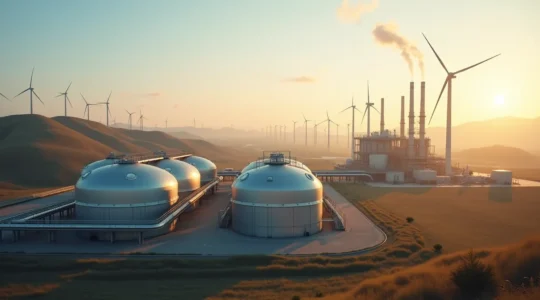
How Can Green Hydrogen Truly Decarbonize Steel Manufacturing?
The successful decarbonization of steel manufacturing hinges not on simply swapping coal for hydrogen, but on mastering the systemic integration of variable power, continuous chemical processes, and large-scale industrial hardware. Green hydrogen production creates a fundamental conflict between the 24/7…
Read more
The Strategic Case: Why Hydrogen Is Set to Outperform Batteries in Long-Haul Logistics
For long-haul trucking, the core decision is not battery vs. hydrogen, but electrons vs. molecules; the superior energy density of hydrogen molecules offers a structural advantage in payload and operational uptime that electrons cannot match. Battery-electric trucks sacrifice significant cargo…
Read more
How to Extend Your EV Battery Life to 15 Years?
Maximizing your EV battery’s lifespan to 15 years isn’t about avoiding fast chargers; it’s about understanding the physics of when and how you charge to mitigate electrochemical stress. Consistent fast charging isn’t the enemy; charging at a high state-of-charge (above…
Read more
Beyond Renewables: A Policy Framework for Structuring Electricity Markets for Decarbonization
Effective decarbonization hinges not on simply adding renewable capacity, but on a fundamental redesign of electricity market rules and tariff structures to manage system-wide challenges like intermittency and reliability. Negative prices are a symptom of inflexible generation and flawed subsidy…
Read more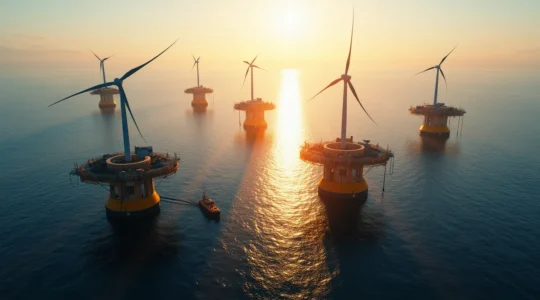
How Are Floating Wind Turbines Anchored in Deep Waters?
Anchoring floating wind turbines is not about brute-force resistance against the ocean; it’s a masterclass in dynamic engineering, material science, and predictive AI designed to work in symbiosis with nature’s power. The core challenge is managing constant motion, solved by…
Read more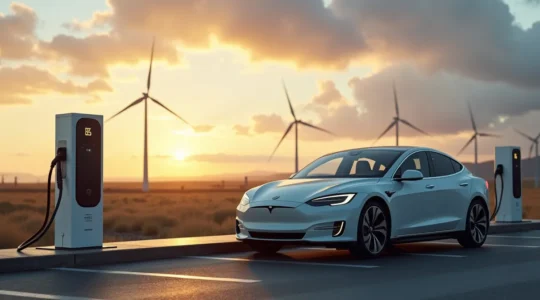
How Can Electric Vehicles Stabilize the Power Grid?
Stabilizing the power grid with Electric Vehicles is not a simple plug-and-play feature; it is a complex systems architecture challenge. The core issue isn’t just storing energy, but managing its flow through distributed intelligence, deciding whether the “brains” are at…
Read more
How Can Small Businesses Profit From Waste Streams?
Profiting from waste isn’t about better recycling—it’s about redesigning your business to eliminate the concept of “waste” entirely. Map every output, tangible and intangible, to uncover its hidden asset value. Shift from selling products to selling services (PaaS) to retain…
Read more
Why do 60% of Green Tech Startups Fail Within the First 3 Years?
The staggering 60% failure rate in green tech is not a story of bad technology; it’s a systemic mismatch between the physical realities of hardware and the software-centric playbook mistakenly applied by both founders and investors. Founders fall into a…
Read more