
The key to a child’s robust immune system isn’t sterile cleanliness, but rich, biodiverse microbial exposure that actively calibrates their defenses.
- Early life contact with diverse microbes from natural environments teaches the immune system to distinguish between real threats and harmless allergens.
- Scientific studies show that even short-term exposure to forest-like environments can increase immune cell activity and diversify a child’s skin and gut microbiota.
Recommendation: Prioritize regular, unstructured time in diverse natural settings—from forests and biodiverse urban parks to simply interacting with soil—as a fundamental part of a child’s healthy development.
For generations, parents have grappled with a perplexing paradox: as our living environments have become cleaner and more sanitized, the rates of allergies, asthma, and other immune-mediated diseases in children have skyrocketed. The conventional wisdom, often termed the “hygiene hypothesis,” suggested that we were simply being *too clean*, depriving young immune systems of the necessary training to function correctly. While this idea holds a kernel of truth, it oversimplifies a far more intricate and fascinating biological process.
The issue is not merely the absence of dirt, but the absence of *diversity*. Our bodies, and particularly our immune systems, co-evolved over millennia in constant conversation with a rich tapestry of microorganisms found in soil, on plants, and in the air of natural landscapes. This constant exposure doesn’t just “boost” immunity; it actively educates and regulates it, a process known as immunomodulation. We have inadvertently silenced this crucial dialogue by creating sterile urban and suburban landscapes.
But what if we could intentionally reintroduce this dialogue? The answer lies not in abandoning hygiene, but in understanding a more nuanced concept: the “biodiversity hypothesis.” This perspective posits that the true key to a resilient immune system is exposure to a wide variety of “old friends”—the harmless microbes from the natural world. This article moves beyond the platitudes to explore the scientific mechanisms linking forest exposure to fewer allergies. We will examine how this microbial calibration works, explore practical ways to foster it, and reveal how urban design itself can become a tool for public health.
To understand the profound connection between nature and our immune health, this article breaks down the science into actionable insights. The following sections explore the mechanisms at play, from the microscopic world of our gut to the design of our cities, providing a comprehensive guide for parents and public health officials alike.
Summary: Unpacking the Science of Nature and Immunity
- Why Is Too Much Hygiene Bad for Your Microbiome?
- How to Practice “Forest Bathing” for Stress Reduction?
- Parks or Rivers: Which Reduces Anxiety Levels More Effectively?
- The Male Tree Mistake That Caused the Asthma Epidemic
- How to Design Hospital Gardens That Speed Up Patient Recovery?
- Why Does Your Stomach Hurt When You Are Anxious?
- Why Do Monarch Butterflies Need Your City Balcony?
- Why Treating the Mind and Body Separately Fails to Cure Burnout?
Why Is Too Much Hygiene Bad for Your Microbiome?
The modern emphasis on sterility is a double-edged sword. While crucial for preventing infectious diseases, an excessively hygienic environment can starve the immune system of the data it needs to develop properly. This concept is best explained by the “Old Friends” or “biodiversity” hypothesis, which refines the original hygiene hypothesis. It suggests that our immune systems require early and regular exposure to a diverse range of harmless microorganisms—our “old friends”—to learn tolerogenic responses. Without this education, the immune system can become dysregulated, overreacting to harmless substances like pollen, dust mites, or certain foods, which is the hallmark of an allergic reaction.
This isn’t just theory; it’s observable reality. When a child plays in a forest, they are not just getting dirty; they are interacting with a complex microbial ecosystem. This biodiverse input helps colonize their skin and gut with a rich variety of bacteria, fungi, and other microbes. This diverse microbiome is critical for training immune cells, particularly T-regulatory cells, whose job is to suppress inappropriate immune responses and prevent autoimmunity and allergies. A sterile environment leads to a low-diversity microbiome, leaving the immune system uncalibrated and prone to inflammatory mistakes.
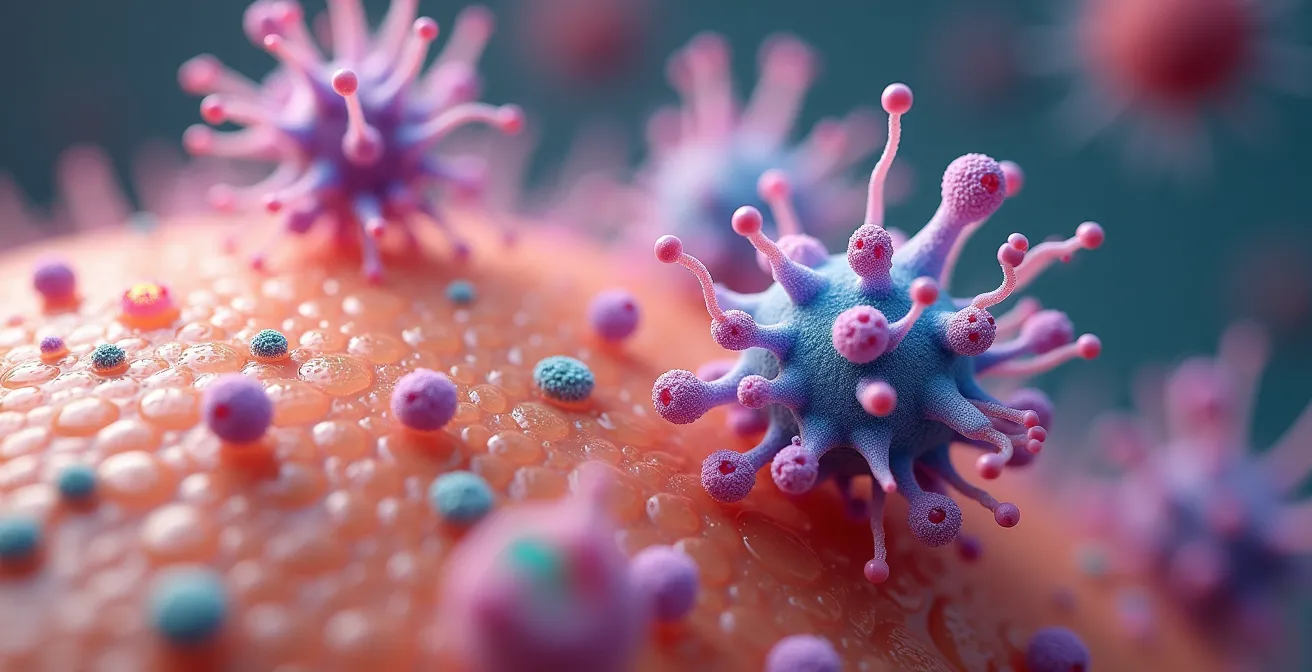
A landmark Finnish study dramatically illustrates this principle. Researchers transformed the sterile gravel yards of several urban daycare centers by covering them with forest floor and sod. The children were encouraged to play in this new, biodiverse environment. As outlined in the case study published in Science Advances, the results were astonishing: within just 28 days, the diversity of the children’s gut and skin microbiota increased significantly, becoming more similar to that of children who attended nature-oriented daycares daily. Crucially, this was accompanied by positive changes in their immune markers, demonstrating a direct link between environmental biodiversity and immune system calibration.
How to Practice “Forest Bathing” for Stress Reduction?
While the term “forest bathing” (or *Shinrin-yoku* in Japanese) may sound whimsical, it refers to the scientifically validated practice of immersing oneself in a forest environment to improve health. It goes beyond simple hiking; the goal is to consciously connect with nature through all five senses. For children and adults alike, this practice offers a direct pathway to both stress reduction and immune modulation. The benefits are not just psychological; they are deeply physiological, driven by the air we breathe and the environment we touch.
The forest air itself is a form of medicine. Trees and plants release aromatic volatile organic compounds called phytoncides to protect themselves from pests and disease. When we inhale these compounds, they have a profound effect on our bodies. As the renowned expert Dr. Qing Li has extensively researched, this exposure can trigger a significant increase in the activity and number of one of our body’s most powerful immune defenders: Natural Killer (NK) cells. These cells are crucial for fighting off virally infected cells and detecting early-stage cancers.
Forest bathing trips significantly increased NK activity and the numbers of NK, perforin, granulysin, and granzymes A/B-expressing cells, and these effects lasted at least 7 days after the trip.
– Dr. Qing Li, International Journal of Immunopathology and Pharmacology
Practicing forest bathing is simple. It involves walking slowly and without a specific destination, pausing frequently to look, listen, smell, and touch. Encourage children to feel the texture of bark, listen for different bird calls, and smell the damp earth. This mindful approach reduces levels of the stress hormone cortisol while simultaneously activating the parasympathetic nervous system, which governs our “rest and digest” state. This reduction in stress is, in itself, a powerful immune regulator, as chronic stress is known to suppress immune function.
Your Action Plan: A Microbiome-Boosting Nature Outing
- Choose a Diverse Location: Opt for a mixed forest with varied vegetation, a stream, or a meadow over a monoculture tree farm or a manicured park. The greater the plant diversity, the greater the microbial diversity.
- Engage the Senses (Hands-On): Encourage safe, direct contact. Let children touch moss, collect fallen leaves of different shapes, and feel the soil. This is the primary vector for microbial transfer.
- Follow the 20-Minute Rule: Aim for at least 20 minutes of immersive time. This is the approximate duration studies suggest is needed to begin seeing measurable reductions in cortisol levels.
- Ditch the Sanitizer (Temporarily): Refrain from using hand sanitizer during the outing. Simple hand washing with water is sufficient if needed, preserving the beneficial microbes acquired on the skin.
- Practice Mindful Observation: Turn it into a game. “How many different types of leaves can we find?” or “Let’s close our eyes for a minute and count how many different sounds we can hear.” This enhances the stress-reducing benefits.
Parks or Rivers: Which Reduces Anxiety Levels More Effectively?
When considering nature’s impact on health, it’s tempting to lump all natural environments together. However, emerging research indicates that different types of natural settings—often categorized as “green spaces” (parks, forests) and “blue spaces” (rivers, lakes, coastlines)—may have distinct effects on our physiology and mental well-being. While both are beneficial, their specific immunomodulatory and anxiety-reducing pathways can differ, offering a more tailored approach to nature-based health interventions.
Green spaces, particularly those with high biodiversity, are champions of microbial exposure and air quality improvement. The rich soil, diverse foliage, and phytoncides released by trees directly contribute to a healthier microbiome and a calmer immune system. For children with allergic asthma, the benefits are particularly pronounced. One study highlighted in a comprehensive review found that proximity to green spaces was associated with significantly decreased pro-inflammatory cytokine levels and enhanced lung function, suggesting a powerful anti-inflammatory effect. These environments actively help to soothe an overactive immune response.
Blue spaces, on the other hand, offer a unique set of benefits often linked to their sensory characteristics. The sound of moving water and the visual expanse of a lake or ocean have a deeply restorative psychological effect, proven to reduce rumination and anxiety. Furthermore, the air near moving water, such as waterfalls or ocean surf, is rich in negative ions. While research is ongoing, some studies suggest these ions can improve mood and respiratory function. A report on the effects of waterfall exposure noted an activated immune system and improved lung function, indicating a stimulating, rather than purely calming, effect. Therefore, the choice between a park or a river may depend on the desired outcome: green spaces for deep immune regulation and blue spaces for acute stress and anxiety reduction.
The Male Tree Mistake That Caused the Asthma Epidemic
Not all green space is created equal. A critical, yet often overlooked, factor in the rise of urban allergies is a phenomenon sometimes called “botanical sexism.” For decades, urban planners and landscapers have overwhelmingly favored planting male trees in cities. The rationale was practical: male trees do not produce seeds, fruit, or pods, which are perceived as messy and costly to clean up from sidewalks and streets. However, this well-intentioned decision has had a disastrous and unforeseen consequence for public health.
In the world of dioecious trees (species with separate male and female plants), the males produce pollen, and the females receive it to produce seeds. By planting vast monocultures of male trees from species like maple, ash, and poplar, cities have inadvertently created massive “pollen bombs.” With few or no female trees to capture the airborne pollen, the concentration of these potential allergens in the urban air has increased exponentially. This creates an environment where even people who were not previously sensitive can develop allergies and asthma due to the sheer, overwhelming volume of exposure. The air becomes saturated with a high load of low-diversity pollen, a perfect storm for triggering allergic reactions.

The solution lies in a conscious shift toward biodiverse urban forestry. This involves several key strategies. First, planting a mix of both male and female trees allows the natural cycle to complete, with female trees capturing a significant portion of the pollen. Second, and more importantly, it means moving away from monocultures and planting a wide variety of tree species. Different trees release pollen at different times and of different types, which prevents the massive, synchronized pollen dumps that overwhelm immune systems. A diverse urban forest not only reduces the overall allergen load but also supports a wider range of insects and birds, contributing to the very environmental biodiversity that is foundational to a well-calibrated immune system. This thoughtful approach to urban planning turns our cities from allergy triggers into therapeutic landscapes.
How to Design Hospital Gardens That Speed Up Patient Recovery?
The concept of a “healing garden” is evolving from a pleasant amenity to a clinical tool. In the context of the biodiversity hypothesis, hospital gardens are not just for aesthetic appeal or psychological respite; they are active immunoregulatory environments. By thoughtfully designing these spaces, healthcare facilities can create powerful opportunities to restore a patient’s microbiome, reduce stress, and potentially accelerate recovery, especially for those whose immune systems are compromised or dysregulated.
A patient’s microbiome is often severely depleted during a hospital stay due to sterile conditions, antibiotic use, and a restricted diet. A biodiverse garden offers a direct antidote. Recent research has provided stunning evidence of this effect. For instance, Australian research demonstrated that a mere 45-minute exposure to a hospital garden could increase the diversity of a patient’s skin microbiota by a staggering 200% compared to remaining indoors. This rapid recolonization by beneficial environmental microbes is a crucial first step in re-calibrating the immune system and strengthening the skin’s barrier function against pathogens.
The design of these gardens is paramount. To be immunoregulatory, a garden must prioritize biodiversity. This means including a wide variety of native plants, shrubs, and trees, creating different “micro-ecologies” within the space. Incorporating plants known to release beneficial phytoncides, such as conifers, can enhance the garden’s therapeutic effects. Studies show that these chemicals can increase NK cell activation and even reverse stress-induced immunosuppression. The design should encourage gentle interaction—accessible pathways, comfortable seating, and sensory elements like fragrant herbs or textured leaves—to maximize both the psychological and microbial benefits. By viewing gardens as living pharmacies, hospitals can add a powerful, non-invasive therapy to their arsenal, fostering healing from the outside in.
Why Does Your Stomach Hurt When You Are Anxious?
The familiar sensation of “butterflies” or a churning stomach during times of stress is a clear manifestation of the gut-brain axis—an intricate, bidirectional communication network linking our central nervous system with our gastrointestinal tract. However, this connection is far deeper than just a fleeting feeling. The health and diversity of our gut microbiome play a central role in this dialogue, profoundly influencing both our mood and our physical response to anxiety. For children, whose microbial and neurological systems are still developing, this link is especially critical.
A low-diversity gut microbiome, often resulting from a lack of environmental exposure, a poor diet, or antibiotic use, can disrupt this communication. It can lead to a “leaky gut,” where the intestinal barrier becomes more permeable, allowing inflammatory molecules to enter the bloodstream and signal the brain, contributing to feelings of anxiety and depression. Conversely, psychological stress can negatively alter the composition of the gut microbiome, favoring the growth of pro-inflammatory bacteria and reducing beneficial ones. This creates a vicious cycle where anxiety worsens gut health, and poor gut health exacerbates anxiety. In fact, recent microbiome research reveals that children with reduced gut microbiome diversity show a 2-fold increase in anxiety-related gastrointestinal symptoms.
This is where the “Old Friends” hypothesis connects directly to mental health. The same microbial inputs from nature that calibrate the immune system also seed the gut with a diverse population of bacteria essential for producing neurotransmitters like serotonin and regulating inflammation. As researchers from the FORWARD study note, a lack of this early exposure can have lasting consequences.
Limited exposure to microbes in early life can negatively affect the evolution of the human microbiota composition, and the composition and diversity of the early life gut microbiome has been associated with development of atopic conditions.
– Research team from FORWARD study, Journal of Allergy and Clinical Immunology
Therefore, treating a child’s stomach pain during anxious periods requires looking beyond just the stomach. Fostering a healthy gut microbiome through a diet rich in fiber and regular exposure to natural, biodiverse environments is a foundational strategy for supporting both mental and digestive well-being. The solution to an anxious stomach may very well be found in the forest floor.
Why Do Monarch Butterflies Need Your City Balcony?
The sight of a monarch butterfly fluttering through a concrete cityscape can seem like a small, fleeting moment of beauty. However, it represents something far more significant: a vital link in a chain of biodiversity that directly impacts human health. Creating small-scale habitats for pollinators like butterflies on urban balconies and in small gardens is not just an act of conservation; it is an act of public health, helping to re-weave the web of life that our immune systems depend on.
The presence of pollinators like monarch butterflies is an indicator of a healthy, biodiverse ecosystem. For monarchs to thrive, they need native plants like milkweed for their caterpillars and a variety of nectar-producing flowers to fuel their migration. By planting these on a balcony, you are creating a “stepping stone” habitat that helps these creatures navigate the urban sprawl. This, in turn, supports a greater diversity of plant life, which then fosters a more complex and varied community of microorganisms in the surrounding soil and air. It is this environmental biodiversity that provides the essential inputs for our own microbiome.
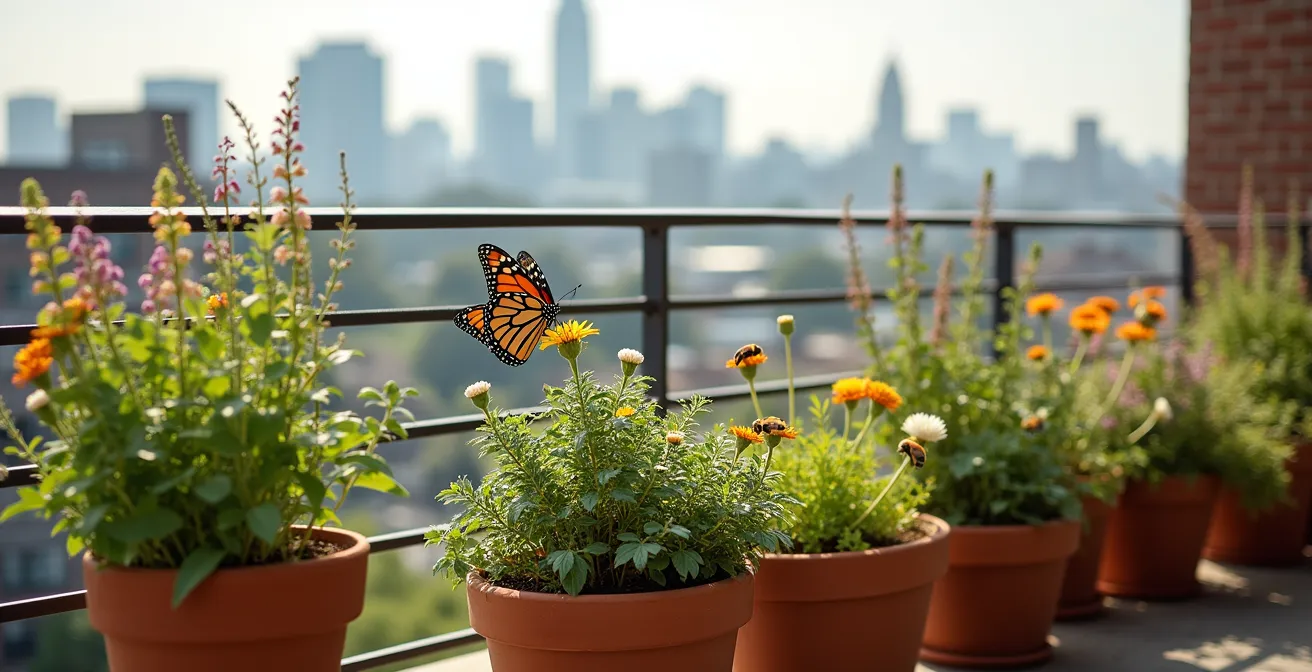
The connection to allergies is direct and scientifically supported. Atopic individuals—those with a genetic predisposition to allergies and asthma—are more susceptible to the negative effects of a low-biodiversity environment. A landmark PNAS study found that atopic individuals had 25% lower environmental biodiversity around their homes compared to their healthy counterparts. This suggests that their immune systems, already prone to dysregulation, are particularly starved for the calming, regulatory inputs that a diverse natural environment provides. By cultivating a patch of nature, no matter how small, city dwellers can actively increase the biodiversity around their homes, contributing to a healthier environment for themselves and their neighbors. Your balcony is not just a personal space; it is a potential node in a city-wide ecological network that supports both pollinators and human immune health.
Key Takeaways
- Immune system health is not about sterility but about calibration through diverse microbial exposure from nature.
- Practices like “forest bathing” have measurable physiological benefits, including reduced stress and enhanced activity of immune cells like NK cells.
- Urban planning decisions, such as favoring biodiverse flora and creating natural “stepping stones,” are critical public health strategies for reducing allergies and improving well-being.
Why Treating the Mind and Body Separately Fails to Cure Burnout?
The modern approach to health often operates in silos: we see a gastroenterologist for stomach issues, a dermatologist for skin rashes, and a therapist for anxiety or burnout. Yet, as the science of the microbiome and immunomodulation reveals, these issues are deeply interconnected, often stemming from a common root cause: a dysregulated immune system and a disrupted dialogue between our bodies and the environment. Treating the mind and body as separate entities is not just inefficient; it fundamentally fails to address the holistic nature of our biology.
Burnout, for example, is often viewed as a purely psychological or work-related stress issue. However, it is increasingly understood to be a state of chronic, low-grade inflammation. This inflammation can be driven by psychological stress, but it is also massively influenced by environmental factors. A loss of biodiversity in our surroundings leads to a less diverse microbiome, which in turn impairs the development of a balanced, tolerant immune system. Without the regulatory signals from our “old friends,” the immune system is more likely to exist in a pro-inflammatory state, making us more susceptible to the cascade of physical and mental symptoms that characterize burnout.
This unified view is essential for effective prevention and treatment. The path to curing burnout, managing anxiety, and reducing allergies involves the same foundational principles: restoring the body’s natural state of balance through a healthy microbiome. This requires a holistic strategy that integrates mental health practices with physical and environmental ones. It means combining mindfulness and stress management with a diet that feeds our gut microbes and, crucially, re-establishing our connection with the natural world. As leading researchers in the field conclude, the stakes are incredibly high.
A loss of biodiversity and reduced exposure to microbial diversity impairs tolerogenic immune development, resulting in immune dysregulation contributing to an increase in immune-mediated diseases such as asthma and other allergic diseases, autoimmune diseases, and cancer.
– Frontiers in Science research team, Frontiers in Science
For parents, the next logical step is to consciously integrate diverse nature contact into your family’s routine, viewing it not as recreation, but as an essential health practice. For public health officials and urban planners, the imperative is to champion urban biodiversity, recognizing that parks, greenways, and even roadside plantings are fundamental pillars of a resilient public health infrastructure.